The Growth Coach
July 2026
Know someone who could use a bolt of inspiration? Send them this newsletter!
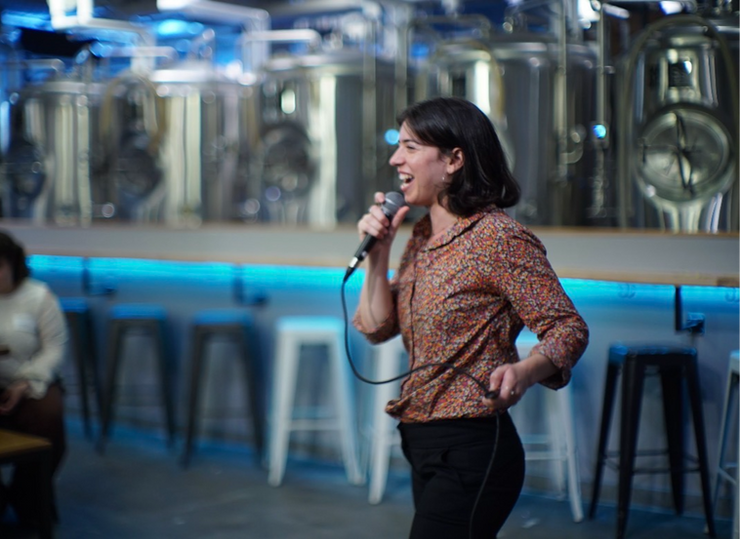
It was a FuN night.
What I'm Reading
Our belief systems are often compilations of a million small and large pieces of data, or evidence that backs up a perceived fact. Often, what limits our ability to achieve our goals is the set of self-held beliefs about ourselves, what we should do, or who we should be. It’s time you stop should-ing on yourself.
We convince ourselves of these beliefs, based on selective evidence throughout our lives. They run so deep that we often don’t recognize vast amounts of alternative evidence proving those beliefs wrong.
Author of NYT best-selling book, Beyond Belief, Nir Eyal prompts us to ask two important and challenging questions in his Substack article, How to Find the Hidden Beliefs Holding You Back.
He asks, “Is it really true?” Now, be honest here!
And, “What if the opposite is true?”
What if a loved one answered these? Would you still have these limiting beliefs?
What I'm Listening To
In Prentis Hemphill’s Becoming the People Podcast, we learn about Simon Sinek's definition of leadership: “Leaders are the ones who have the courage to go first, to put themselves at personal risk to open a path for others to follow.” In this episode, An Outdated Model of Leadership, Hemphill discusses what we accept from leadership and what we need from them. We may want certainty; we may need to surrender. Listen to learn more.
What I'm Doing
Scandal of particularity: the most wonderful and mysterious things we can imagine — beauty, love, joy — only come to us through profoundly small, even pedestrian particulars. Not through some grand event. Through this cup of coffee. This birthday cake. This walk to the car. It's kind of crazy, even a bit offensive, that this is how reality works. Our egos want joy to require something big and hard-won. It doesn't. The particular moment is as good as it gets — and wonderfully, it's more than enough.
Which is why the search for joy is so much easier than you think. It's not about cramming more momentous experiences into your life. It's about getting more out of all the particular moments you already have — in whatever season you're in. Those very moments are the ones you'll pass by but once.
This week's practice is one of our favorites: Sudden Savoring — a quick but deep dive into a moment while it's still happening, extracting the maximum meaning from it before it slips past. It may sound difficult. It's surprisingly easy, and it feels great.
Choose one moment today and savor it completely.
1. Catch yourself enjoying something. That's the only trigger you need. The first sip of coffee. Petting the dog. Someone waving you ahead in the checkout line. The smell of the trees as you step out of the car. A beautiful sentence in a book.
2. Name it before you leave it. The moment you notice it, tell yourself: "Oh! I love this! Don't miss it!"
3. Stop and give it your complete attention. Close your eyes for 2–3 seconds — really, that's all it takes — and let that taste or scent or softness wash all over and through you. Take a snapshot of it in your body.
4. Write down what you got. Tonight, one or two sentences: What was the moment? What did it give you?
From Bill Burnett and Dave Evans
What's Moved Me
F*ckup Nights VOL V was destined for failure and ended up becoming a huge success.
We sold out four events, with over 75 tickets each, days before the event. Vol V, we sold 33 tickets.
We had three speakers at each event. For Vol V, one speaker dropped out a week before the event and a second the morning of.
Public transit was working. Half a subway line was out of service, causing major delays.
I thought about canceling many times, but my partner kept saying, the show must go on.
The day of, at noon, we asked a former speaker to share another story. She was in immediately.
I lost my wallet in the middle of a busy street next to the Boston Common. I found it 15 minutes later.
I edited slides, didn’t practice, and off we go.
We pivoted, shared our failure story of selling out again, and created more time for having meaningful conversations with those sitting next to each other.
We got the best feedback of our events.
Under pressure, the diamond event was made.
What I'm Wiggling To
Two favorite artists have new albums: Tyla and Jessie Reyez. Check them out!
Stay Playful,
Tamar

Who is The Growth Coach?
The Growth Coach, TGC, Tamar Gaffin-Cahn, believes in unique and creative ways of learning, solving problems, and creating a life that suits her clients, students, and community.
If you know anyone who is stuck and wants to change their life, they can book a free 30-minute consultation using this link.
Life Design Through Leadership & Career Coaching
Follow Along